Head First, Eyes Open

Daily writing prompt
How do you deal with uncertainty?

I’ve never been much of a planner, so uncertainty doesn’t really scare me. One advantage of being a disorganized person, I suppose. I’ve always subscribed to the idea of “we’ll cross that bridge when we get to it.” There’s only so much planning you can do before life decides to take things in a completely different direction.

That said, I do have a tendency to overthink. In the past, it sometimes reached the point of self-sabotage. These days, I don’t think I do it nearly as much. I’ve learned that dwelling too long on uncertainty only fuels anxiety. For me, it can become a spiral that leads to panic rather than preparation.

The first time I had a panic attack, I genuinely thought I was dying. I’d heard people talk about them before and understood the concept, but nothing could have prepared me for the intensity of experiencing one firsthand.

Over time, I’ve come to realize that sometimes we’re fortunate and things work out in our favor. Other times, and often it feels like this is the case for me, they don’t. When that happens, all you can do is find the courage to face what’s in front of you. Struggle isn’t weakness. Everyone is fighting battles of their own. Some people have simply learned to hide them better than others.

At the end of the day, the only constant is that nothing remains constant. Change is inevitable, and uncertainty is one of life’s few guarantees. The best we can do is accept that reality and trust ourselves to face whatever comes next.

Growing Up

What’s a moment when you realized you were officially an adult?

For much of my childhood, I lived in a cocoon of protection. My parents spared no effort in shielding me from hardship, and my sister, too, placed my needs above her own. It was a world where happiness seemed permanent, where every want was met before I even knew to ask. I thought that was life — simple, safe, and endlessly cared for.

The illusion shattered the day I was handed medical proxy papers when my mother was admitted to the hospital. I was not yet eighteen, still technically a child, but in that moment the world demanded something more of me. Though I ultimately needed a relative to sign, the weight of responsibility pressed down on me. I felt inadequate, unprepared, and suddenly aware that the real world was far harsher than the one I had been living in. That was the day I realized I had to grow up.

From then on, every step became part of that growth. I finished school, pursued my undergraduate studies, and eventually secured a job. Each milestone carried with it the quiet determination to shift roles — from being the one cared for to becoming the one who could care. I wanted to give back to the family that had given me everything, to stand as their support just as they had always stood for me.

Growth, I have learned, is not a single event but a continuous unfolding. It began in that hospital corridor, with trembling hands holding papers I could not yet sign, and it continues each day as I navigate adulthood. I am still growing, still learning, still striving to balance the weight of responsibility with the gratitude I feel for the love that raised me.

Adulthood is not about perfection. It is about stepping forward even when you feel inadequate, about carrying the lessons of protection into the practice of care. My journey is ongoing, but I know now that growth is not something to fear — it is the path that allows me to honor the family who gave me everything, by becoming someone who can give back in return.

Food, My Ancient Enemy

Which is the best restaurant in your city?

Lately, I’ve noticed so many writing prompts about food. They make me think harder than usual, and sometimes I feel a little clueless about what to say. But food, I realize, isn’t just about taste. It’s about the places we go, the people we sit with, and the memories we carry home.

For me, the best restaurant isn’t only about how crazy good the food tastes — though that matters. It’s also about wanting to go back again and again. Still, I’ve learned that atmosphere counts too. I don’t want a place that’s too crowded. I want to hear and talk to the person I’m with. I want to spend time with my family, because those moments give me strength. In the past few years, I’ve yearned for them more than ever — the kind of moments that keep me steady when life feels overwhelming.

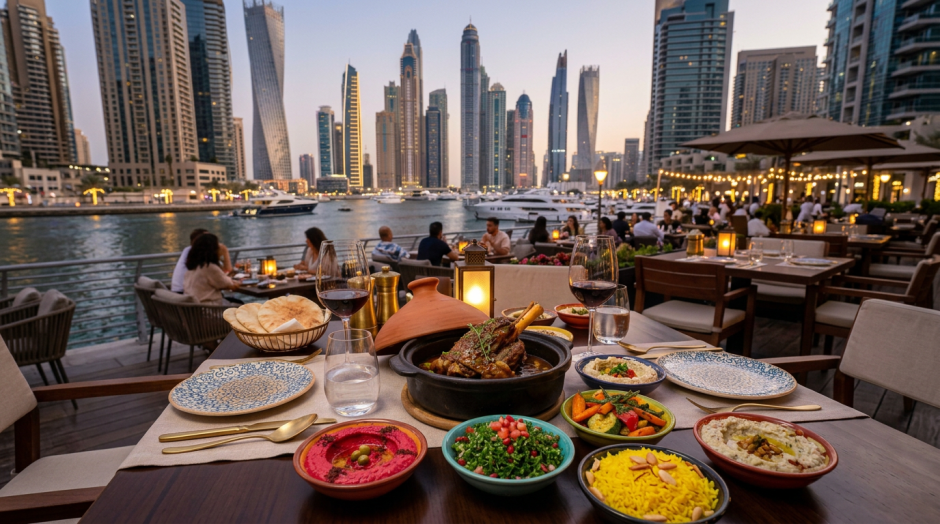
From my childhood, one restaurant stands out is Hatam Al Ta’ai, an Iranian restaurant in Dubai. It’s not really suitable for vegetarians because it is a meat heavy place, but for me it was unforgettable.

They served the most delicious slow-cooked kebabs and lamb chops, with fresh salad, fries, and hummus on the side. It was the only place where I would eat salad without complaint — that’s how good it was. The flavors were rich, comforting, and memorable.

If you ever travel to Dubai, I would wholeheartedly recommend Hatam Al Ta’ai. For me, it wasn’t just about the food, but about the joy of being there, the family moments, and the comfort it gave me.

One more message to the past

If you had a time machine and could send just one message to your past self, what would it say?

What my past self needs to hear from the me of today.

Since I have already answered a similar question motivationally, I am choosing to answer this one a little bit practical. No supportive statement this time, this time it’s a slap in the face do or die statement.

There are moments in life when we convince ourselves that pain is deserved. That imperfection means we must accept whatever treatment comes our way. I once believed that. I stayed in a toxic relationship, telling myself that suffocating was the price of belonging. I gave up pieces of myself to fit into someone else’s mold, and for that, I lost years I’ll never get back.

But here’s the truth I wish I had carved into my mind – You don’t deserve pain just because you’re not perfect. You walk alone happy rather than stay with someone who will break you. Be different. Be controversial. Refuse to bend into society’s expectations. At the end of the day, you still have yourself — and that is enough.

Be alone rather than lonely. Be alone rather than broken.

This is not comfort. This is survival. It’s the reminder I carry now, the lesson I would have shouted into my past self’s ears. And it’s the truth I want anyone reading this to hold close: your wholeness is worth more than any relationship that demands you shatter to fit inside it.

Magic that Distance brings

Which author would you love to have dinner with?

While I love books and the worlds authors create for me with their words, I have never wished to meet any of them in person. My love is for the words themselves — words that open doors to thrillers, mysteries, and fantasy realms where the impossible suddenly feels possible. These stories are dreams I carry with me, and I would not intentionally break that magic.

The mystery of the human mind fascinates me. Two people can grow up in the same circumstances, yet the worlds they imagine will never be the same. That divergence is what makes storytelling so extraordinary. Each reader builds their own version of the author’s world, and that uniqueness is what I treasure most.

Meeting an author, however, feels like it would collapse the boundary between dream and reality. To see the person behind the words might fracture the spell those books have cast over me. I prefer to keep the curtain closed, to let the illusion remain untouched.

There is also a practical side to this choice. Being an introvert, I know I would struggle to hold a conversation with an author. Relating to another reader is easy — we share the experience of being transported. But relating to the author’s mindframe, the place where those worlds were born, feels like a gulf too wide to cross.

So I choose to keep my dream world separate from reality. I admire the craft, I cherish the words, but I do not seek the person behind them. Meeting an author is not on my bucket list. For me, the truest way to honor their work is to let their words live freely in my imagination, untouched by the weight of reality.

Hope rather than Faith

What’s a moment when a stranger completely restored your faith in people?

I have never believed that a single act by a stranger could “completely” restore my faith in humanity. To me, that feels naive. Humanity is not a monolith of goodness or evil—it is a mosaic of choices, each person navigating their own sense of what is right. Some choices wound, others heal. And in between, there are the small, fleeting gestures that remind us the world is not entirely indifferent.

I think of the stranger who stood behind me, shielding me from the unwanted closeness of someone pressing in too far. Or the child who paused their play to hold out a hand to a pregnant neighbor, helping her step over a puddle. These moments are not grand or heroic, yet they carry a quiet weight. They whisper that kindness still exists, that even in a world heavy with selfishness and cruelty, there are sparks of care that refuse to be extinguished.

Such acts do not erase the darker truths of human behavior. They do not transform humanity into something it is not. But they ignite hope—hope that life can still surprise us with grace, hope that the burden of hardship can be lightened by compassion. And it is this hope that gives strength. It is what steadies us when exhaustion tempts us to give up, what reminds us that perseverance is not futile.

Faith in humanity, then, is not about sweeping redemption. It is about noticing the lanterns in the dark, however small their glow. It is about carrying those lights within us, so that when the path feels unbearable, we remember: the world is not all bad. And that memory alone can be enough to keep us moving forward.

We made it

If your future self could send you one sentence, what do you hope it would say?


While most people would account for this to achieving some major milestone in their life. I think for me those three words means that I survived.. Not survival in the dramatic sense of escaping catastrophe, but survival in the quieter, relentless way of enduring the everyday battles that threatened to erode me piece by piece.

There were years when each day felt like poison slowly dripping into my veins. The challenges were not loud or cinematic, but they were persistent, gnawing at my spirit until I wondered if I could endure. And yet, I did. Against odds that seemed endless, I managed the one thing many never get to — the privilege of growing older. To slow down, to look back, to reminisce about the memories created along the way.

Survival did not mean I never failed or broke down. I did, many times. But each breakdown carried a lesson, each failure planted resilience. The fact that I endured long enough to appreciate both the struggles and the fleeting joys is itself a victory I once thought impossible.

When I look at my younger self, I no longer judge. I feel sorrow for the battles endured and gratitude for the strength they forged. My younger self was not weak — they were surviving in the only way they knew how. Every struggle stretched me further. Every year added another layer of resilience. Survival transformed into growth, and growth into compassion.

So when I imagine my future self whispering, “You survived, and that was enough,”. It is the reminder that even in the darkest days I did not succumb to the challenges but I resisted long enough to make it to the next day.

Flavors that Stir the Heart

Daily writing prompt
What’s the best local dish you’ve ever eaten while traveling?

Food has always felt complicated to me, almost like my kryptonite. I never thought of myself as someone with a good palate. For the longest time, I believed the purpose of eating was simply to not be hungry, and taste didn’t matter. That mindset made me cautious whenever I traveled — I would search for food I was already comfortable with, rather than risk trying something new and wasting it. It was only recently, when someone asked me how my last meal tasted and all I could say was “not bad,” that I realized how much my attitude toward food reflected something deeper about me.

I’ve started to change that. My first real step was trying Thai food. At the Original Hoy-Ka restaurant, I expected fiery spice, but the waiter recommended gentler dishes: Chicken Satay and Ka Prao with Rice. They turned out to be sweet, comforting, and surprisingly easy for me to enjoy. The portions were large enough to take home, and for once, my taste buds didn’t resist. That experience made me wonder what it would be like to taste these dishes in Thailand itself. Maybe one day, when courage and circumstance align, I’ll add Thailand to my travel list.

Japanese food was another revelation. I tried Miso Soup alongside a rice bowl with crispy seaweed, egg, and sesame-coated chicken. I later learned it might have been Oyakodon or Katsudon. The flavors were explosive, layered, and overwhelming in the best way. Japanese food feels wholesome, like it carries a sense of home even when eaten alone. It evokes warmth, belonging, and joy — emotions I didn’t expect to find in a meal.

I tried a Philly Cheesesteak in Philadelphia. Rich, hearty, and indulgent, it felt like comfort food in its truest form. But it raised a question for me: does eating a dish from another region within the same country count as “traveling through cuisine”? I think it does. Just as Indian food varies different regions American food shifts from Philly cheesesteaks to Tex-Mex. Regional cuisines are worlds within worlds, each worth exploring.

Food is no longer just about filling my stomach. It’s becoming a journey — one that mirrors travel, culture, and even emotion. Cooking these dishes myself may not capture their authenticity, but it allows me to participate in the story of flavors. I’m learning to accept and appreciate tastes from around the world, one dish at a time. And maybe, through this journey, I’ll discover not just new cuisines, but new parts of myself.

Under the Queen’s Umbrella

Rating: 4.5 out of 5.

I personally love historical dramas. I love the imagery they evoke and the references they make to the history and culture they portray.

Under the Queen’s Umbrella follows the story of Queen Im Hwa-ryeong, played by actress Kim Hye-soo. Side note before I continue: her portrayal of the role is phenomenal. Every expression conveys so much emotion — I simply love her performance.

Back to the series: the story centers on a queen who is truly the backbone of her family. It shows how a woman, even within the strict boundaries of earlier times, does everything in her power to protect her loved ones. She works quietly in the background, never demanding recognition, but finding joy in her family’s success.

After losing her firstborn son — the Crown Prince, played by Bae In-hyuk — under suspicious circumstances, the Queen quickly realizes how his death has placed her family in danger. Traditionally, the younger brothers of the Crown Prince were not educated to the same level, so they would not be considered rivals to the throne. This practice was meant to protect them from harm. However, after the Crown Prince’s death, rivalry erupts among his brothers and stepbrothers, each competing for the title. The Queen understands that her sons must adapt quickly and become worthy candidates.

She sets out on a mission to prepare them for the throne, all while learning the true challenges each prince faces and giving them courage and support to overcome those struggles. At the same time, she navigates the schemes of ministers, the other wives of the king, and the King’s mother. Unknown to her, hidden enemies with secret agendas are plotting against her in ways she never expected.

The series portrays the extent of a mother’s love and the lengths she will go to protect those she cherishes. With a strong plot and a wonderful cast who embody their roles and emotions perfectly, Under the Queen’s Umbrella is a drama I would wholeheartedly recommend. It offers a relaxing watch, distinct from the usual K-drama trope of romance. While there is a love story, the series keeps its focus firmly on the politics of the royal household.

Lessons Beyond the Classroom Door

Daily writing prompt
What’s a thing you wish schools actually taught?

As a child, I grew up believing that grades defined my worth. Parents and teachers repeated the mantra that success meant high scores, and I absorbed it without question. Being an average student felt like failure, as though my future had already been decided before I even had the chance to explore it.

But adulthood revealed a different truth. Life is not measured by grades but by resilience. Schools never taught me how to face obstacles or recover from setbacks, yet failure became my greatest teacher. Each disappointment carried within it the seed of opportunity, reminding me that life continues after loss. I realized that those who have stumbled often develop the strength to rise again, and that strength matters far more than being first in class.

School also gave me a false perception of my abilities. I loved mathematics but struggled with tests, so I assumed numbers weren’t for me. Choosing a career in accounting was never on my horizon. Yet when I pursued a public accounting diploma, I excelled — achieving the best scores of my life. That experience showed me how misleading school assessments can be, and how real-world practice uncovers strengths hidden beneath doubt. It was liberating to discover that I was capable of thriving in a field I once thought was beyond me.

Another lesson overlooked in classrooms is empathy. As children, we naturally shared in each other’s joys and sorrows. But competition often eroded that instinct. I remember being told not to help classmates because they might score higher. For a time, I even felt conflicted when those I tutored outperformed me. There was sadness in seeing someone else succeed at my expense. Over the years, though, I let go of the need to be the “top performer.” I learned to genuinely celebrate others’ success, realizing that my own achievements are not diminished when someone else shines. That shift restored a sense of humanity that competition had dulled.

Perhaps the most practical gap is financial literacy. Schools rarely teach us how to manage money, yet it is essential for independence. When I first began earning, I was terrified of spending — worried that debt and insecurity would trap me. My sister had to drag me to upgrade my laptop because I was too anxious to spend. I avoided dinners out, and I hesitated to buy anything for myself. Slowly, I learned to balance savings, expenses, and investments. That skill, absent from classrooms, became a cornerstone of my confidence. It taught me that financial responsibility is not about fear, but about balance and trust in oneself.

Looking back, I see that school taught me subjects, but life taught me resilience, empathy, and responsibility. Grades may open doors, but it is the lessons beyond the classroom that help us walk through them with strength and purpose. My failures, my rediscovered strengths, my empathy, and my financial independence — these are the true lessons that shaped me.