
Under the Queen’s Umbrella

Rating: 4.5 out of 5.

I personally love historical dramas. I love the imagery they evoke and the references they make to the history and culture they portray.

Under the Queen’s Umbrella follows the story of Queen Im Hwa-ryeong, played by actress Kim Hye-soo. Side note before I continue: her portrayal of the role is phenomenal. Every expression conveys so much emotion — I simply love her performance.

Back to the series: the story centers on a queen who is truly the backbone of her family. It shows how a woman, even within the strict boundaries of earlier times, does everything in her power to protect her loved ones. She works quietly in the background, never demanding recognition, but finding joy in her family’s success.

After losing her firstborn son — the Crown Prince, played by Bae In-hyuk — under suspicious circumstances, the Queen quickly realizes how his death has placed her family in danger. Traditionally, the younger brothers of the Crown Prince were not educated to the same level, so they would not be considered rivals to the throne. This practice was meant to protect them from harm. However, after the Crown Prince’s death, rivalry erupts among his brothers and stepbrothers, each competing for the title. The Queen understands that her sons must adapt quickly and become worthy candidates.

She sets out on a mission to prepare them for the throne, all while learning the true challenges each prince faces and giving them courage and support to overcome those struggles. At the same time, she navigates the schemes of ministers, the other wives of the king, and the King’s mother. Unknown to her, hidden enemies with secret agendas are plotting against her in ways she never expected.

The series portrays the extent of a mother’s love and the lengths she will go to protect those she cherishes. With a strong plot and a wonderful cast who embody their roles and emotions perfectly, Under the Queen’s Umbrella is a drama I would wholeheartedly recommend. It offers a relaxing watch, distinct from the usual K-drama trope of romance. While there is a love story, the series keeps its focus firmly on the politics of the royal household.
Teach you a Lesson

Rating: 3.5 out of 5.

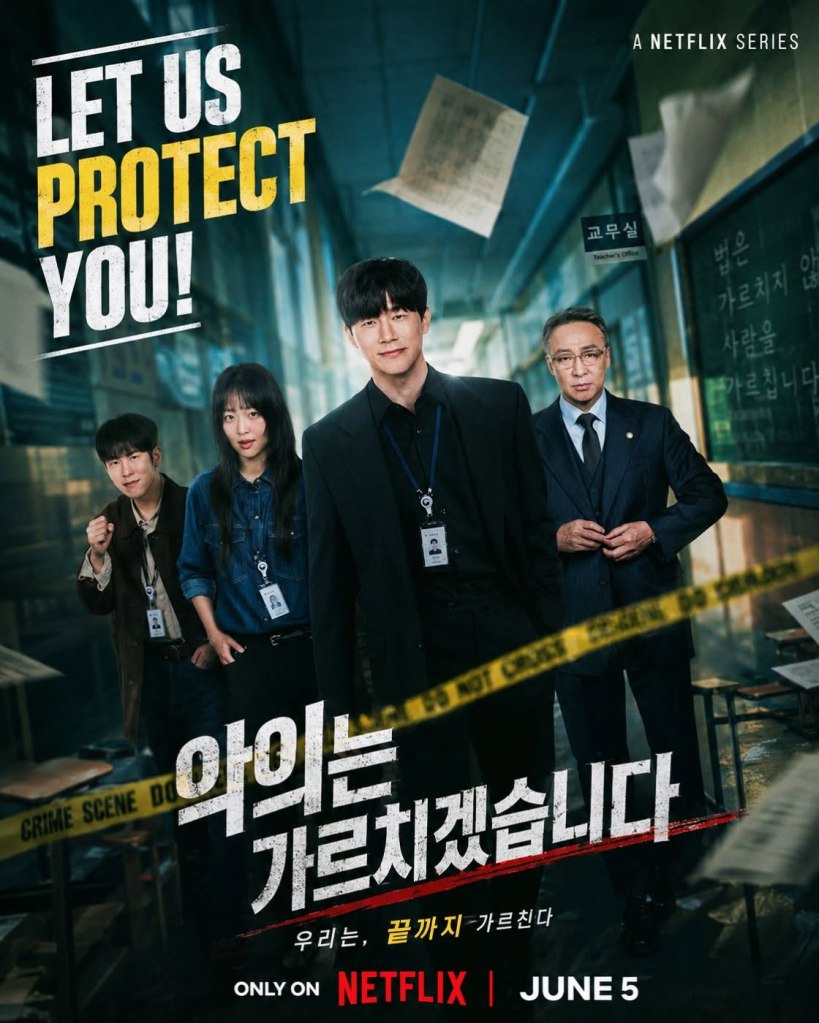
The Netflix series is adapted from the Naver webtoon Get Schooled which takes a bold look at the failures of Korea’s education system and the troubling leniencies given to juvenile offenders. In Korea, young offenders often receive lighter punishments due to their age, a loophole that has drawn many teenagers and young adults into crime. The series dramatizes this issue through the creation of the fictional Educational Rights Protection Board (ERPB), an agency formed after the tragic death of a teacher at the hands of a student. Its mission is to reform schools so that students can thrive regardless of their backgrounds, while ensuring that offenders are held accountable for the harm they cause.

Led by Education Minister Choi Gangseok, the ERPB team—Na Hwajin, Im Harim, and Bong Geundae—travels across the country to confront problematic schools. Their approach is uncompromising, using every method available to “straighten out” troubled students and teachers while tackling the root causes of dysfunction. This narrative highlights the importance of early intervention, showing that shaping children’s minds at the right age can prevent destructive adult behavior and, ultimately, reshape society.

The series is compelling in its social critique and gripping in its drama, but it leaves viewers wanting more depth in the characters’ backstories. While the focus on systemic reform is powerful, the show misses opportunities to explore how each ERPB member’s own school experiences shaped their moral drive to fix the system. I think that if there were more detailed flashbacks to their personal struggles of the team members could have added emotional resonance and made the characters more relatable. It feels as though the 10-episode format constrained the storytelling, prioritizing the reform narrative over character development and limiting its ability to connect deeply with viewers.

Despite these limitations, Get Schooled is definitely worth watching. It offers a refreshing take on education as crime prevention and demonstrates that the right actions taken at the right time can transform not just individuals but society as a whole.