Changing the Tide of Time

Daily writing prompt
If you could erase one event from history, what would it be?

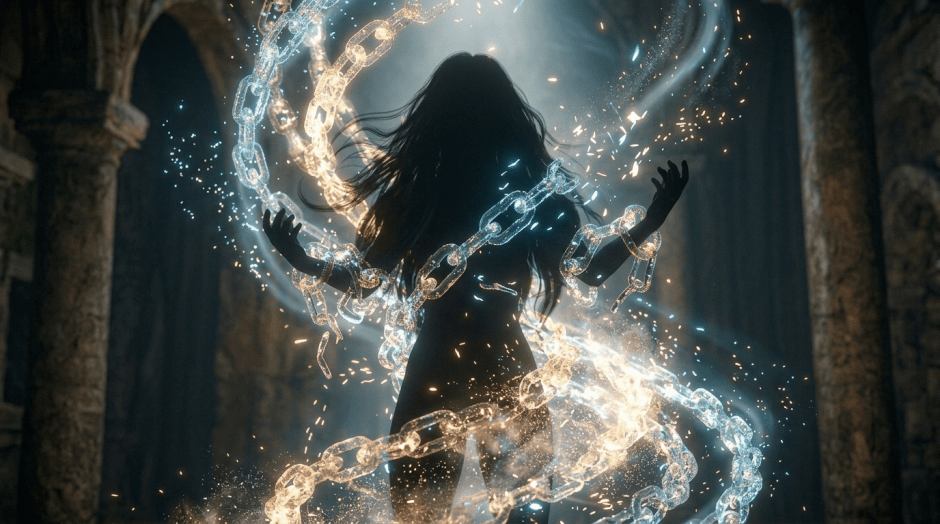
If I could erase one event or concept from history, I would choose anything related to nuclear technology, whether it is nuclear bombs, nuclear accidents, or the harmful consequences of nuclear radiation. The reason is simple: it is one of the few things that not only takes lives but also destroys the quality of life for those who survive. A person may have had everything ahead of them, yet their life can be reduced to the lasting physical effects caused by nuclear exposure. What makes it even more tragic is that the suffering is often endured by innocent people who had no part in the decisions that led to it. Beyond affecting one generation, the consequences can continue to impact future generations as well.

On a more emotional level, I would want to erase every instance of violence. Looking at the news today, it often feels as though violence has become so common that we no longer wake up shocked by a single tragedy. Instead, we wonder how many incidents have occurred. Violence has crossed boundaries of reason, age, and circumstance. What affects me most is thinking about the innocent people involved, not only those who are directly harmed, but also their families. I also think about the families of those who caused the harm, as they too are often left to deal with the consequences and pain.

When I consider the question from a more philosophical perspective, I wonder whether changing one event would actually make the world better or worse. We can never truly know. The butterfly effect suggests that even the smallest change can have vast and unpredictable consequences. A single event may have influenced countless outcomes that shaped the world we live in today. If there were a way to identify the one event responsible for the greatest suffering, I might choose to erase it. Yet I cannot know whether the event that replaced it would create a better world or a much worse one.

So, in the end, my answer is that I do not know. Because I do not know, I would choose not to change history at all. Not because the world today is perfect, but because it is the life I have been given. Despite all the pain, hardship, and injustice that exist, I am grateful for my life. I can only hope and pray for a better future, not just for myself, but for everyone in the world.
Head First, Eyes Open

Daily writing prompt
How do you deal with uncertainty?

I’ve never been much of a planner, so uncertainty doesn’t really scare me. One advantage of being a disorganized person, I suppose. I’ve always subscribed to the idea of “we’ll cross that bridge when we get to it.” There’s only so much planning you can do before life decides to take things in a completely different direction.

That said, I do have a tendency to overthink. In the past, it sometimes reached the point of self-sabotage. These days, I don’t think I do it nearly as much. I’ve learned that dwelling too long on uncertainty only fuels anxiety. For me, it can become a spiral that leads to panic rather than preparation.

The first time I had a panic attack, I genuinely thought I was dying. I’d heard people talk about them before and understood the concept, but nothing could have prepared me for the intensity of experiencing one firsthand.

Over time, I’ve come to realize that sometimes we’re fortunate and things work out in our favor. Other times, and often it feels like this is the case for me, they don’t. When that happens, all you can do is find the courage to face what’s in front of you. Struggle isn’t weakness. Everyone is fighting battles of their own. Some people have simply learned to hide them better than others.

At the end of the day, the only constant is that nothing remains constant. Change is inevitable, and uncertainty is one of life’s few guarantees. The best we can do is accept that reality and trust ourselves to face whatever comes next.

Growing Up

What’s a moment when you realized you were officially an adult?

For much of my childhood, I lived in a cocoon of protection. My parents spared no effort in shielding me from hardship, and my sister, too, placed my needs above her own. It was a world where happiness seemed permanent, where every want was met before I even knew to ask. I thought that was life — simple, safe, and endlessly cared for.

The illusion shattered the day I was handed medical proxy papers when my mother was admitted to the hospital. I was not yet eighteen, still technically a child, but in that moment the world demanded something more of me. Though I ultimately needed a relative to sign, the weight of responsibility pressed down on me. I felt inadequate, unprepared, and suddenly aware that the real world was far harsher than the one I had been living in. That was the day I realized I had to grow up.

From then on, every step became part of that growth. I finished school, pursued my undergraduate studies, and eventually secured a job. Each milestone carried with it the quiet determination to shift roles — from being the one cared for to becoming the one who could care. I wanted to give back to the family that had given me everything, to stand as their support just as they had always stood for me.

Growth, I have learned, is not a single event but a continuous unfolding. It began in that hospital corridor, with trembling hands holding papers I could not yet sign, and it continues each day as I navigate adulthood. I am still growing, still learning, still striving to balance the weight of responsibility with the gratitude I feel for the love that raised me.

Adulthood is not about perfection. It is about stepping forward even when you feel inadequate, about carrying the lessons of protection into the practice of care. My journey is ongoing, but I know now that growth is not something to fear — it is the path that allows me to honor the family who gave me everything, by becoming someone who can give back in return.

One more message to the past

If you had a time machine and could send just one message to your past self, what would it say?

What my past self needs to hear from the me of today.

Since I have already answered a similar question motivationally, I am choosing to answer this one a little bit practical. No supportive statement this time, this time it’s a slap in the face do or die statement.

There are moments in life when we convince ourselves that pain is deserved. That imperfection means we must accept whatever treatment comes our way. I once believed that. I stayed in a toxic relationship, telling myself that suffocating was the price of belonging. I gave up pieces of myself to fit into someone else’s mold, and for that, I lost years I’ll never get back.

But here’s the truth I wish I had carved into my mind – You don’t deserve pain just because you’re not perfect. You walk alone happy rather than stay with someone who will break you. Be different. Be controversial. Refuse to bend into society’s expectations. At the end of the day, you still have yourself — and that is enough.

Be alone rather than lonely. Be alone rather than broken.

This is not comfort. This is survival. It’s the reminder I carry now, the lesson I would have shouted into my past self’s ears. And it’s the truth I want anyone reading this to hold close: your wholeness is worth more than any relationship that demands you shatter to fit inside it.

Magic that Distance brings

Which author would you love to have dinner with?

While I love books and the worlds authors create for me with their words, I have never wished to meet any of them in person. My love is for the words themselves — words that open doors to thrillers, mysteries, and fantasy realms where the impossible suddenly feels possible. These stories are dreams I carry with me, and I would not intentionally break that magic.

The mystery of the human mind fascinates me. Two people can grow up in the same circumstances, yet the worlds they imagine will never be the same. That divergence is what makes storytelling so extraordinary. Each reader builds their own version of the author’s world, and that uniqueness is what I treasure most.

Meeting an author, however, feels like it would collapse the boundary between dream and reality. To see the person behind the words might fracture the spell those books have cast over me. I prefer to keep the curtain closed, to let the illusion remain untouched.

There is also a practical side to this choice. Being an introvert, I know I would struggle to hold a conversation with an author. Relating to another reader is easy — we share the experience of being transported. But relating to the author’s mindframe, the place where those worlds were born, feels like a gulf too wide to cross.

So I choose to keep my dream world separate from reality. I admire the craft, I cherish the words, but I do not seek the person behind them. Meeting an author is not on my bucket list. For me, the truest way to honor their work is to let their words live freely in my imagination, untouched by the weight of reality.

Hope rather than Faith

What’s a moment when a stranger completely restored your faith in people?

I have never believed that a single act by a stranger could “completely” restore my faith in humanity. To me, that feels naive. Humanity is not a monolith of goodness or evil—it is a mosaic of choices, each person navigating their own sense of what is right. Some choices wound, others heal. And in between, there are the small, fleeting gestures that remind us the world is not entirely indifferent.

I think of the stranger who stood behind me, shielding me from the unwanted closeness of someone pressing in too far. Or the child who paused their play to hold out a hand to a pregnant neighbor, helping her step over a puddle. These moments are not grand or heroic, yet they carry a quiet weight. They whisper that kindness still exists, that even in a world heavy with selfishness and cruelty, there are sparks of care that refuse to be extinguished.

Such acts do not erase the darker truths of human behavior. They do not transform humanity into something it is not. But they ignite hope—hope that life can still surprise us with grace, hope that the burden of hardship can be lightened by compassion. And it is this hope that gives strength. It is what steadies us when exhaustion tempts us to give up, what reminds us that perseverance is not futile.

Faith in humanity, then, is not about sweeping redemption. It is about noticing the lanterns in the dark, however small their glow. It is about carrying those lights within us, so that when the path feels unbearable, we remember: the world is not all bad. And that memory alone can be enough to keep us moving forward.

We made it

If your future self could send you one sentence, what do you hope it would say?


While most people would account for this to achieving some major milestone in their life. I think for me those three words means that I survived.. Not survival in the dramatic sense of escaping catastrophe, but survival in the quieter, relentless way of enduring the everyday battles that threatened to erode me piece by piece.

There were years when each day felt like poison slowly dripping into my veins. The challenges were not loud or cinematic, but they were persistent, gnawing at my spirit until I wondered if I could endure. And yet, I did. Against odds that seemed endless, I managed the one thing many never get to — the privilege of growing older. To slow down, to look back, to reminisce about the memories created along the way.

Survival did not mean I never failed or broke down. I did, many times. But each breakdown carried a lesson, each failure planted resilience. The fact that I endured long enough to appreciate both the struggles and the fleeting joys is itself a victory I once thought impossible.

When I look at my younger self, I no longer judge. I feel sorrow for the battles endured and gratitude for the strength they forged. My younger self was not weak — they were surviving in the only way they knew how. Every struggle stretched me further. Every year added another layer of resilience. Survival transformed into growth, and growth into compassion.

So when I imagine my future self whispering, “You survived, and that was enough,”. It is the reminder that even in the darkest days I did not succumb to the challenges but I resisted long enough to make it to the next day.

Too Many to Remember, A Few to Hold Close

What’s the best piece of advice you’ve ever received?

I have often wondered why advice rarely stays with me. People offer words of guidance when I am in deep trouble, and in those moments I cling to them, using them as lifelines. Yet once the storm passes, the words fade. If asked later what was said, I can barely recall. Perhaps advice is not meant to be stored like a quote in memory, but to be lived in the moment it is needed.

Still, a few pieces of advice have managed to carve themselves into my thoughts. One of them is simple but profound: you are the only person who will truly fight for yourself. No one else can fully understand where I come from. Not because people are shallow, but because it is impossible. Even a mother, who is said to understand everything, struggles at times. Circumstances change, generations shift, and the battles I face are not the same as hers. This advice reminds me that self-advocacy is not selfishness — it is survival.

Another piece of advice I hold close is to keep trying. The point is not to win every time, but to keep the possibility of winning alive. Effort itself is a form of hope. Even if success comes later than I want, it is better to keep the horizon open than to declare defeat too soon. Trying is not about immediate triumph; it is about refusing to close the door on possibility.

The Perfect Image

What’s something you used to worry about but don’t anymore?

I have never been a very confident person, largely because I never fit the appearance that society calls “beautiful.” As I grew older, the world seemed to grow meaner. As a child, I did not fully understand the taunts hidden behind sweet smiles and caring words. But with time, I began to hear the malice between the lines. Eventually, the mockery was no longer disguised, and the words broke me. At eleven or twelve, I did not have the emotional strength to look beyond the bad days. I withdrew from everything — from family, from the things I loved, from my dreams and hopes.

Yet growing older brought a realization: I could be perfect in every way, and people would still judge, still comment, still find something to tear down. Many speak without understanding the impact their words can have. Others live with the sole intention of hurting. You can never truly know another person’s motives, but you can choose not to acknowledge them. It is easier said than done, but if you begin today, over time it becomes a habit. Slowly, peace replaces the noise.

Society’s expectations are ever-changing. Just when you think you have done everything right, something shifts, and suddenly you are wrong again. For years, I kept adapting myself, trying to meet those expectations. But the moment I stopped caring about what others thought, I found happiness.

Now I do what I want. If people think I am silly or foolish, I no longer mind. Their judgment is fleeting, but my joy in those moments is lasting. A silly memory can bring back a smile long after the moment has passed. And in this world, happiness is the most precious thing one can have. So I choose to cherish my silliness, to hold onto my happiness, and to live beyond the weight of other people’s opinions.

Dreams and its Manifestations

I am glad today that I have started dreaming again. In my opinion, you only have dreams when you have hope, and if you had spoken to me a year ago, I probably had no hope. That slowly killed any dreams I had. Now, come to think of it, I have revived some of my old dreams and added a few new ones to the list.

There are many dreams I hold — some tied to reality, others to fantasy. But here is a question: do I say my dream out loud to manifest it, or do I work in silence and revel in it materializing into reality? Here’s to throwing caution to the wind. My dream is to have a home of my own and to be a writer. These are definitely the most outrageous ones on my list.

Writing has always been my passion. I do not need to be a full-time author, but to even write something that others would like to read would be enough. I want to open doors to new worlds of imagination just like books have done for me. As a child, I didn’t understand the world and its problems — everything felt too life-altering. In that small frame of mind, books gave me an escape from reality. They showed me characters of great strength, worlds where magic was possible, and how a protagonist could change the world.

But my dream of writing is not only about stories. It is about leaving behind pieces of myself in words that might comfort someone else, or spark reflection in a stranger. It is about capturing fleeting emotions before they vanish, giving them permanence in sentences. Writing is my way of building bridges between my inner world and the minds of others. It is also my declaration of individuality — a space where no one dictates the rhythm of my sentences or the worlds I create. In writing, I find the same freedom I long for in a home of my own.

The other dream I have always kept close to my heart is the dream of a house of my own. It is a strong desire to express my individuality. I am the youngest at home, and in my family the elders always hold sway in decisions. I do have a room of my own, and one would say that is a luxury in itself. However, I cannot change anything in the room without permission from my parents or elder sister. Not that it is a bad thing — I tend to make impulsive decisions — but I would really like to decorate my home to match my aesthetics. Our family home is my mother’s space, and I would not want to disrupt her image of a perfect home. Yet seeing her has also inspired me. It is one reason I want to make a space of my own, free of the influences of my family, where every corner reflects me.