Words that Move

What is your favorite quote?

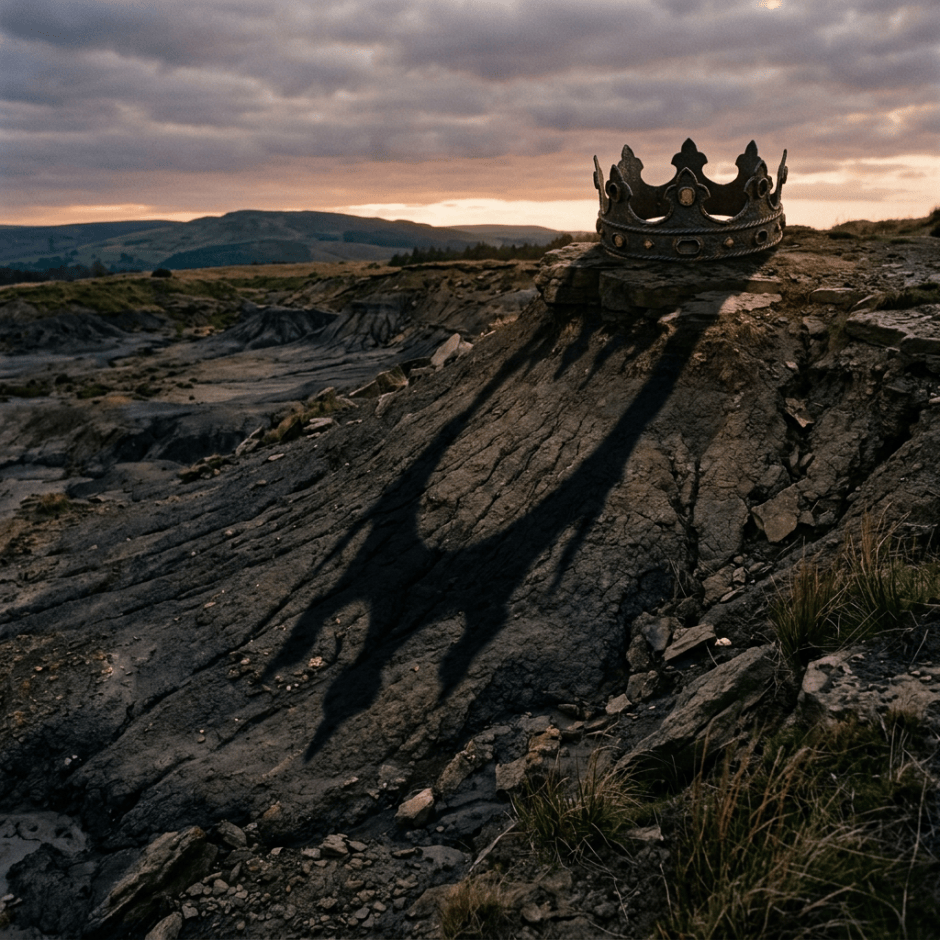
“Show me a Hero, I will write you a tragedy”

There have been many quotes that have resonated with me throughout my life, but one quote has always stayed with me.

There is so much depth and meaning packed into that single line. I have generally been a negative person, but this quote helps me look beyond that negativity. It reminds me that, despite how often I blame myself and feel like a failure, every person I admire has faced challenges of their own. They have failed, stumbled, and experienced moments where everything seemed to fall apart.

We rarely stop to consider the scars they carry or the struggles they endured to reach the heights at which we see them today. This quote shifts my focus from their success to their journey. It reminds me of their setbacks, failures, and perseverance.

It is not the shining crown that motivates me. It is the realization that these successful people are just like me. They are not perfect. They found a way forward despite their imperfections, mistakes, and obstacles.

I have always considered this to be the quote I relate to most. While I may come across many other quotes with profound meaning, this one has carried me through my weakest moments. It has helped me on days when I felt the whole world was against me, and it has given me the strength to keep moving forward.
Be yourself but more

If you had to give one life-changing tip, what would it be?

“Be yourself.” Most of us have heard this line at least once, perhaps on a billboard or tucked into an advertisement. It’s become such a cliché that its meaning often slips away. Yet, beneath those two words lies a strength that can be interpreted in countless ways.

Like many motivational phrases, its meaning shifts depending on who hears it. In today’s world, where right and wrong seem to change with circumstance, “be yourself” can be a life-affirming call to embrace imperfection. But for someone blinded by narcissism, it can become a justification for harmful traits. That’s why I believe the phrase needs an unspoken addition: Be yourself — but do not destroy another.

You cannot truly be yourself if your choices trample someone else. Selfishness in moderation is healthy. Walking away from a toxic situation is not weakness; it is strength. Some may call you fragile for leaving without “making the other pay,” but in truth, it takes far more courage to walk away than to stay and retaliate.

Most people carry pain — not the physical kind, but the soul-crushing kind. The world is crueler than it appears on the surface, and we rarely know what battles others are fighting. Never change for someone who only wants to mold you into their world. Change for someone who wants to grow with you, to build a shared space where both can belong. And sometimes, walking alone is also being true to yourself — because solitude can be the path to finding your place in the world.

In the end, being yourself is not about defiance or conformity, but about choosing a way of living that honors your truth without diminishing another’s. It is about carrying kindness alongside authenticity, and realizing that the most genuine version of yourself is the one that makes space for both courage and compassion.

Dreams and its Manifestations

I am glad today that I have started dreaming again. In my opinion, you only have dreams when you have hope, and if you had spoken to me a year ago, I probably had no hope. That slowly killed any dreams I had. Now, come to think of it, I have revived some of my old dreams and added a few new ones to the list.

There are many dreams I hold — some tied to reality, others to fantasy. But here is a question: do I say my dream out loud to manifest it, or do I work in silence and revel in it materializing into reality? Here’s to throwing caution to the wind. My dream is to have a home of my own and to be a writer. These are definitely the most outrageous ones on my list.

Writing has always been my passion. I do not need to be a full-time author, but to even write something that others would like to read would be enough. I want to open doors to new worlds of imagination just like books have done for me. As a child, I didn’t understand the world and its problems — everything felt too life-altering. In that small frame of mind, books gave me an escape from reality. They showed me characters of great strength, worlds where magic was possible, and how a protagonist could change the world.

But my dream of writing is not only about stories. It is about leaving behind pieces of myself in words that might comfort someone else, or spark reflection in a stranger. It is about capturing fleeting emotions before they vanish, giving them permanence in sentences. Writing is my way of building bridges between my inner world and the minds of others. It is also my declaration of individuality — a space where no one dictates the rhythm of my sentences or the worlds I create. In writing, I find the same freedom I long for in a home of my own.

The other dream I have always kept close to my heart is the dream of a house of my own. It is a strong desire to express my individuality. I am the youngest at home, and in my family the elders always hold sway in decisions. I do have a room of my own, and one would say that is a luxury in itself. However, I cannot change anything in the room without permission from my parents or elder sister. Not that it is a bad thing — I tend to make impulsive decisions — but I would really like to decorate my home to match my aesthetics. Our family home is my mother’s space, and I would not want to disrupt her image of a perfect home. Yet seeing her has also inspired me. It is one reason I want to make a space of my own, free of the influences of my family, where every corner reflects me.

Day 236: Taking a step back

When I first decided to pursue my qualification, I imagined myself building a meticulous schedule and sticking to it with unwavering discipline. After all, this milestone deserved seriousness. Yet what unfolded was far from that vision. I became procrastination personified, caught between exhaustion from work and the lure of late-night distractions.

I am not a morning person, and studying at night felt natural. But after eight to ten hours of work, my mind was drained, my body begged for rest, and yet I found myself scrolling through endless reels instead of sleeping. The cycle left me tired, guilty, and unprepared. My study plans shifted constantly — two hours a day, then weekends, then impossible five-hour marathons after work. Each plan collapsed under its own weight, and eventually, I rescheduled my exam.

The anxiety leading up to that decision was suffocating. For days, I carried the dread of failure, until finally, rescheduling brought relief. In that pause, I noticed another pattern: stress had pushed me back into online shopping, the very habit I had tried to limit this year. Purchases became a coping mechanism, a temporary dopamine fix for mounting pressure.

Yet amid the chaos, one good habit emerged — art. I began sketching, experimenting with digital drawings, and creating spreads. Art became my anchor, a healthier outlet for stress and a reminder that creativity can restore balance when life feels overwhelming.

Stepping back taught me something vital: slowing down is not failure. It is recalibration. I had been lazy at first, then delusional with unachievable targets, and finally regretful when timelines shifted. But failing outright would have been worse. By pausing, I gave myself space to breathe, to reflect, and to redirect energy toward what matters.

Consistency is not about grand gestures or impossible schedules. It is about small, steady steps — reducing what drains me and increasing what sustains me. My life may feel like a leaking boat, but leaks can be patched. With patience, awareness, and gentler expectations, I can steer myself back on course.

Day 221: Trying to

have heard over and over again that to develop good behavior you don’t need to be perfect — you just need to be consistent. But that’s where I struggle. I always want things to be good because I don’t want people to find fault in what I do. I think I probably want their appreciation, but the main thing I worry about is someone saying that it’s bad. I don’t particularly want everyone to like what I do, but I really don’t want anyone to hate it. Is that a shallow thought? I end up spending way too much time trying to perfect the things I do, and at some point I feel it’s taking too much time. Then I decide it isn’t worth it, and my hope of starting a good habit fades away. With the pressure of work and studies, good habits fall out of the list of things that get done in the day.

I wanted to make exercise a daily thing just to keep myself healthy. I tried for three months, but the body aches kept getting worse and worse until I gave up. The thought of pain made me want to take a break. I kept thinking I would get back to it, but the truth is I never actually did.

I wanted to stop eating outside food and start cooking at home. I wanted to learn different recipes. I don’t have a refined palate — if it were up to me, I could probably live on instant food for the rest of my life. But I knew it wasn’t healthy, and I wanted to eat better. I managed to cook for two days in a week, and then I was done. By day two I felt exhausted and didn’t have the energy to try again.

Another thing I lose is my hobbies and passion projects. I wanted to start writing again. I’ve always wanted to write my own novel. When I was 13, I wrote the first chapter after months of creating characters and a plot line. It took me four months because I kept re‑editing it. But as schoolwork increased, I dropped the weekly writing practice.

I also wanted to continue improving my art skills. I started drawing whenever I found time — between school notes and random pieces of paper. Over time, I collected a lot of sketches stuffed into a file. I wanted to learn portrait painting, but I never put in the time to improve.

When it comes to sleep versus good habits, sleep wins. And when work and study come into the picture, hobbies fall off my mind. I am trying to stay consistent. I am trying to make a better version of myself. This year I thought I would start doing things every day, but it’s like I start and then stop, start again, go on for some days, and then stop again. Consistency is my Everest, and I am hoping that maybe this time around, I can conquer it.

Evil or Experienced

Daily writing prompt
What villain actually had a good point?

Stories are powerful teachers. For many of us, childhood tales from Disney painted morality in stark colors: the hero was pure, kind, and destined to win, while the villain was cloaked in black, ugly in appearance, and evil without reason. These portrayals ingrained in us the idea that people can be neatly divided into “good” and “bad.”

But when I first encountered the Grimm brothers’ tales, I realized how much had been softened in translation. In the original stories, true love did not always conquer, and good people did not always find happy endings. Villains were not born evil — they were often victims first, shaped by cruelty, misfortune, or betrayal. Their darkness was not innate but a reaction to the hand life dealt them.

This perspective challenges the simplistic binaries of morality. The eternal nature versus nurture debate becomes less important than the question of adaptation: how does a person respond to suffering? Some rise above it, choosing compassion despite pain. Others break under its weight, making destructive choices that ripple outward.

And here lies the unsettling truth: morality is relative. The villain in your story may be the hero in someone else’s. A person who hurt you may have protected ten others. Where do we draw the line — with the child who was tortured, or the adult who now tortures? The answer is never simple.

Modern storytelling embraces this complexity. Characters like Maleficent or Killmonger resonate because they are not evil for evil’s sake. They embody pain, injustice, and survival. We may not condone their actions, but we understand them — and that makes them hauntingly real.

The lesson villains teach us is sobering: no one in this world has your absolute good in mind. Even family, often the closest bond, may not always act with pure selflessness. This does not mean we should live in paranoia, but rather in awareness. Stories remind us not to close our eyes and blindly trust, but to see people as they are — complex, flawed, capable of both harm and kindness.

Day 218: Falling, Failing and Finding a way to hold on

It has been more than 200 days since my diagnosis was confirmed, and the weight of it still lingers. I often feel like I’m falling—slipping into fear whenever I think about being alone. The thought of pain flaring up and causing me to stumble or collapse is always at the back of my mind. Independence, something I once took for granted, now feels fragile.

There are days when I feel like I’m failing. I want to reassure my family that I can manage on my own, that I am capable of caring for myself. Yet doubts creep in, whispering that I’m not strong enough. I don’t ask for extraordinary achievements; I only want to do the ordinary things—tasks that make up a normal life—without fear or dependence. But impatience grows as each month passes, reminding me that I’m not yet back to my old self. The mantra “You are better than before” has started to lose its power, and negativity presses harder against the walls I try to build.

And yet, I keep searching for a way to hold on. I remind myself that healing is slow, that years of damage cannot be undone in months. I look at people who seem to carry positivity like a shield and wonder how they manage it all day long. Their willpower feels extraordinary. If I could capture even a fraction of that strength, I believe I could reshape my life.

Holding on doesn’t mean ignoring the fear or denying the setbacks. It means acknowledging the falls, accepting the failures, and still choosing to keep moving forward. That, I think, is where resilience begins.

Do I have to choose one?

Daily writing prompt
Who is your favorite blogger to follow?

I’ve never been one for favorites, but I do love to read—especially anything that provokes me to think differently. While I enjoy conversations with like‑minded people, I’m fascinated by those who hold views opposite to mine. I’ll admit I haven’t always been the most open‑minded person, but I’m learning. Listening to perspectives that challenge me forces my mind into places it wouldn’t normally go.

When I stumble upon a blog that resonates with my own experiences, I can’t help but keep reading. It makes me feel less alone, reminding me that my circumstances aren’t isolated. Others may not face things in the same sequence as I do, but their struggles echo mine. Sometimes the words of a stranger strike so deeply that it feels as though I know them. Without meeting or learning their life story, their writing creates a closeness that’s hard to explain.

On the other hand, bloggers whose views contradict mine often spark the most growth. They push me to consider perspectives I might otherwise dismiss. I believe that having a closed mind is one of the greatest failures. People who can hold strong opinions yet still make space for others are the ones I admire most. For me, it has taken effort to stop building walls when something doesn’t make sense and instead listen with the intent to understand.

This shift hasn’t been instant—it takes time to truly grasp another person’s point of view. But I’ve realized it would be hypocritical to expect others to listen to me if I don’t extend the same courtesy. Slowly, I’ve grown better at it. I now take time after conversations to reflect on where someone is coming from, and strangely enough, it has expanded the way I think. I’ve learned to understand circumstances without rushing to judgment, and even to form friendships with people whose thoughts run opposite to mine.

In the end, I wouldn’t say I have a single favorite blogger. Instead, anyone whose words move my heart and inspire my mind earns my attention.

Not Every Dream is a Waste of Time

Daily writing prompt
What’s a lesson you’ve learned recently that shifted your perspective?

I grew up in a middle-class, working-class family where life revolved around work. My parents labored endlessly, and their idea of fun was taking us to the park. Even then, while we ran around carefree, they sat together on the bench, whispering about the next bill, calculating how to stretch every rupee, every dollar, every ounce of energy. Their lives were a constant negotiation between responsibility and survival.

For years, I believed my path would be no different. I imagined myself joining the cycle of endless work, exhausting my body and spirit to provide for my family, hoping that by the time age caught up with me, I’d have just enough to sustain myself. That was the script I thought I had to follow.

But something has shifted. These days, I’ve started to dream — not the fleeting kind that comes with sleep, but the conscious, deliberate kind that plants hope in the cracks of reality. I know there’s a high chance I may never achieve all that I dream of, and strangely, I’m at peace with that. Because I’ve realized it’s not the fulfillment of dreams that keeps us alive, but the act of dreaming itself. To imagine a life beyond the grind is not foolish; it’s a declaration that we deserve more than survival.

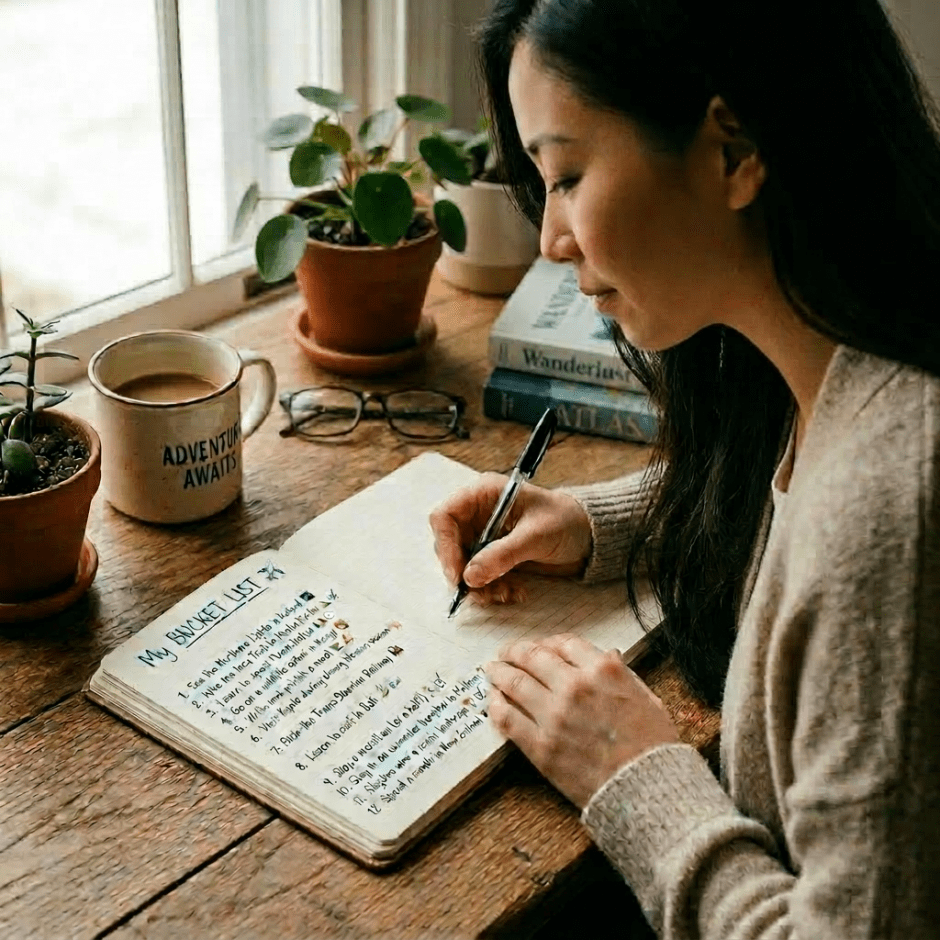
For the first time, I’ve made a bucket list. Ninety percent of the items feel out of reach, but they’re there anyway. To act as reminders of what I want, of who I am beyond the paycheck. Maybe not today, maybe not tomorrow, but someday. And even if someday never comes, the list itself is proof that I’ve allowed myself to hope.

Being practical is wise, yes. But sometimes, being impractical and daring to dream of possibilities is what makes life bearable. Dreams are the spark that light up the monotony, the quiet rebellion against a world that tells us to only endure. They are the whispers that say: you deserve better, you deserve more.

Rituals for better Sleep

Daily writing prompt
What do you do to improve your sleep?

Sleep is one of the most amazing experiences you can have in a day. To enjoy uninterrupted rest, a good dream, and wake up feeling refreshed is truly a blessing.

I’m someone who struggles to get even the bare minimum of six hours of sleep every day, so I sometimes feel hypocritical talking about it. But if no one were judging me, I’d say the first step toward good sleep is to avoid anything that keeps the mind active before bed. Let the day mellow out so that the body’s exhaustion reaches the mind. When I need to get things done, I keep chanting “mind over matter,” and even if my body is exhausted, I find the strength to push through. Logically, doing the opposite should encourage sleep: once the mind shuts down, the body will follow.

One good habit I’ve maintained is not having coffee after 6 p.m.. Even when I feel extremely sleepy in the evening, if the clock shows a time past six, I stop myself. I drink very strong coffee, and it definitely affects me — I end up staying awake into the early hours. Along with coffee, I also restrict sugar. I don’t usually like sweets or chocolates, but on the days I do have them, I get that “sugar rush” — feeling excited and restless, which makes sleep harder.

Another thing I follow is wearing comfortable clothes. I’m not sure if it directly improves sleep, but I feel more relaxed when I’m comfortable. Good pillows and light sheets help too (though in winter, heavier sheets or a duvet are necessary).

Most importantly, I’ve started a new approach: going to bed when I’m actually sleepy. In those moments, the sleep I get is so good — deep, natural, and truly restorative.